Concrete waste factor: how much extra concrete to order
Waste factor is the extra concrete added after the measured volume. It covers real job-site losses: uneven forms, spillage, over-excavation, mixer residue, and the fact that bags and truck orders do not divide perfectly.
What is concrete waste factor?
What does concrete waste factor mean?
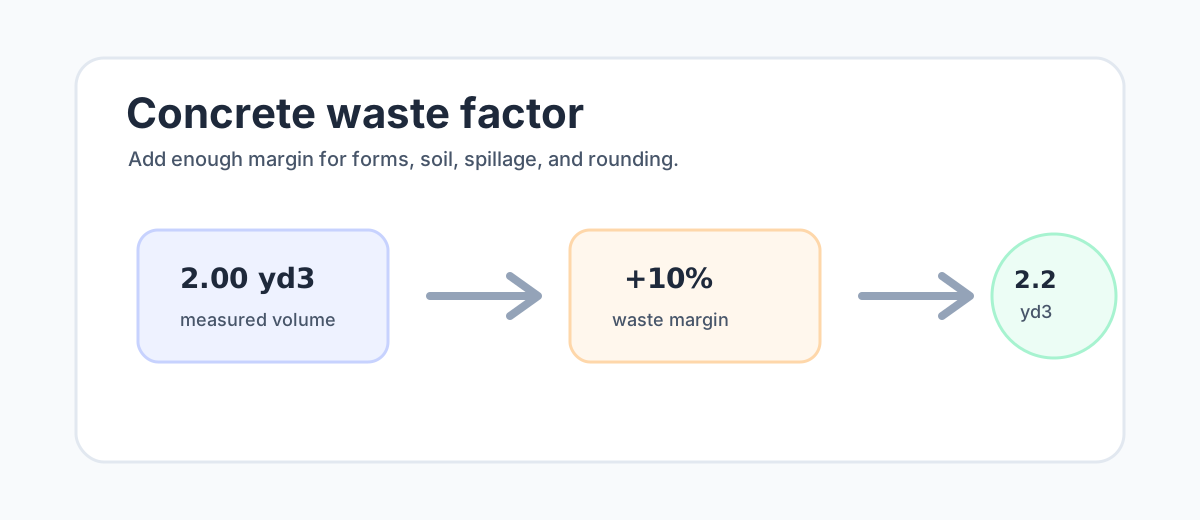
Concrete waste factor is the percentage added to the calculated volume before you order or buy material. If a slab measures 2.00 cubic yards and you use a 10% waste factor, the planning quantity becomes 2.20 cubic yards. The math is simple: measured volume × (1 + waste percentage). The reason matters more than the formula. Real pours rarely match the drawing exactly, and concrete is hard to top up once a truck leaves or bags run out.
Why do concrete calculators add waste?
Calculators add waste because forms bow, subgrade varies, hole walls collapse, and some mix stays in the wheelbarrow, mixer, chute, shovel, or bag. A small extra margin can prevent the most expensive mistake in a pour: stopping short. Running out of concrete creates cold joints, delays finishing, and may require a second delivery or emergency trip for bags. The waste factor is there to reduce that risk, not to make the estimate look bigger.
What waste factor should I use?
Is 10% waste factor enough for concrete?
Ten percent is a practical default for many small slabs, pads, sidewalks, and post-hole jobs. It assumes the site is measured carefully but still has ordinary losses. Use 10% when forms are reasonably straight, the base is compacted, and the job is not so large that a few extra tenths of a yard create a major cost problem. For many DIY and small-crew pours, 10% is the best balance between cost control and not running short.
When should I use 5% concrete waste?
Five percent can be enough for tightly formed work on a flat, compacted base, especially when the pour is simple and the quantity is easy to verify. Examples include a small rectangular pad with consistent depth or a formed walkway where you measured several points and know the base is level. Even then, avoid rounding down. A precise 5% allowance still needs to be rounded to whole bags or to the supplier's ordering increment.
When should I use 15% or 20% concrete waste?
Use 15% or 20% when the job has uncertainty: rough hand excavation, loose soil, a thickened edge, uneven gravel, deep post holes, irregular forms, or several separate pours where leftover concrete may not move cleanly from one spot to another. Post holes are a good example. A hole that was drilled at 10 inches can slough out to 12 inches, and that diameter change uses much more concrete per foot of depth. In that case, a higher waste factor is not conservative; it is closer to the real volume.
Concrete waste factor examples
How much extra concrete for a 2 yard slab?
A slab that calculates to 2.00 cubic yards becomes 2.10 yards with 5% waste, 2.20 yards with 10% waste, 2.30 yards with 15% waste, and 2.40 yards with 20% waste. If the local ready-mix supplier rounds to quarter-yard increments, the 10% estimate may still be ordered as 2.25 yards. That small difference is usually cheaper than ordering 2.00 yards and discovering the forms are a half inch deeper than expected.
How does waste factor affect concrete bags?
Bagged concrete has an extra rounding step. Suppose the waste-adjusted volume is 7.1 cubic feet and you are using 80 lb bags that yield about 0.60 cubic feet each. The math is 7.1 ÷ 0.60 = 11.83, so you buy 12 bags. If the result is 12.01 bags, you still buy 13. That is why the concrete bag calculator rounds up after waste is included.
How to avoid ordering too little concrete
What should I measure before adding waste?
Measure the actual formed length, width, and depth, not only the plan dimensions. Check depth in several places. A 4 inch slab that averages 4.5 inches uses about 12.5% more concrete before waste is even added. For post holes, measure the actual hole diameter after digging. For block core fill, confirm the block size and fill ratio. Waste factor works best after the base volume is honest.
Should I order exactly what the calculator says?
Treat the calculator result as a planning estimate, then compare it with supplier rules. Ready-mix suppliers may have minimum orders, quarter-yard rounding, short-load fees, chute access limits, or recommendations based on local practice. Bag labels may publish slightly different yields from common planning numbers. Use the calculator to get close, then verify the final order with the product or supplier.
Calculate with a waste factor
Which concrete calculator includes waste factor?
Use the concrete calculator for general volume, the slab calculator for flatwork, or the post-hole calculator for round holes. Each tool includes a waste factor field, shows the adjusted result, and keeps the estimate separate from a real quote or code requirement.