Concrete Formula: Calculate Cubic Feet & Yards
Concrete formula: length × width × thickness = cubic feet when every dimension is in feet. Divide cubic feet by 27 for cubic yards, then add 5–10% waste. For a round hole, use π × radius² × depth.
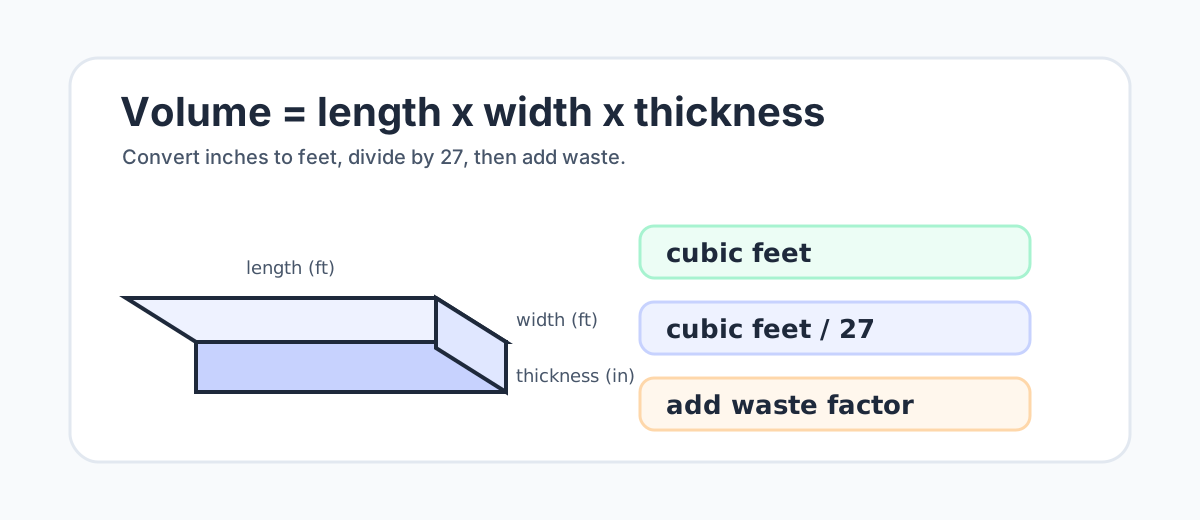
Concrete formula and conversion chart
What is the concrete formula?
Concrete is sold by volume. For a slab or pad, multiply length × width × thickness after converting thickness to feet. A 10 ft × 12 ft slab poured 4 inches thick is 10 × 12 × (4 ÷ 12) = 40 cubic feet, or 40 ÷ 27 ≈ 1.48 cubic yards before waste. For a post footing or pier, use the cylinder formula: π × radius² × depth.
| What you need | Formula or conversion |
|---|---|
| Rectangular pour (cu ft) | length (ft) × width (ft) × thickness (in ÷ 12) |
| Round hole (cu ft) | π × radius² (ft) × depth (ft) |
| Cubic yards | cubic feet ÷ 27 |
| Cubic meters | cubic feet × 0.0283168 |
| Volume with waste | volume × (1 + waste % ÷ 100) |
Step by step
How do I calculate concrete step by step?
Work in one unit system, convert thickness before multiplying, and only round at the end. Rounding every intermediate step makes small pours look cleaner on paper but can undercount bags or yards on the final order.
- Measure the length, width, and thickness of your pour. Use the same unit for length and width (feet), and inches for thickness.
- Convert thickness to feet by dividing inches by 12 (for example, 4 inches = 0.333 feet).
- Multiply length × width × thickness to get the volume in cubic feet.
- Divide cubic feet by 27 to get cubic yards, the unit ready-mix suppliers use.
- Add a waste factor of about 10% so you do not run short.
- To buy bags instead, divide the waste-adjusted cubic feet by the bag yield (0.60 for 80 lb) and round up.
A worked example you can check
How many cubic yards are in a 12 by 12 slab?
Say you are pouring a 12 ft × 12 ft patio at 4 inches. Volume is 12 × 12 × (4 ÷ 12) = 48 cubic feet. Add a 10% waste factor and you have 52.8 cubic feet, or 52.8 ÷ 27 ≈ 1.96 cubic yards. If you would rather mix bags, divide the 52.8 cubic feet by the 80 lb bag yield of 0.60 cubic feet: that is 88 bags, rounded up — clearly the point where ready-mix delivery becomes the sensible choice.
Imperial vs metric
The arithmetic is identical; only the units change. In imperial, keep length and width in feet and thickness in inches, then divide cubic feet by 27 for cubic yards. In metric, work in meters and divide thickness in centimeters by 100 to get meters, which gives cubic meters directly. If you need to convert, 1 cubic meter ≈ 35.31 cubic feet ≈ 1.31 cubic yards. Mixing units mid-calculation — feet with centimeters, say — is the single most common source of a wildly wrong answer.
What waste factor should you use?
A waste factor covers spillage, uneven sub-grade, over-excavation, and the concrete that clings to the mixer and wheelbarrow. For most jobs 10% is a safe default. Tightly formed pours on a flat, compacted base can use 5%. Rough or sloping ground, hand-dug footings, and collapsing soil can justify 15–20%. Ready-mix is hard to top up once the truck leaves, so it is far cheaper to round up than to order a second small load and pay a short-load fee.
Check form depth before ordering
Measure the actual formed depth in several places, not just the plan thickness. A slab specified as 4 inches can become 4.5 or 5 inches if the base is low, the gravel is uneven, or the forms settle. That extra half inch adds about 12.5% more concrete across the whole slab, which is larger than many default waste factors. If the depth varies, use the deepest practical average rather than the thinnest edge.
How many bags of concrete are in a yard?
It depends on the bag, because each weight yields a different volume of mixed concrete. These are common planning figures — the authoritative number is printed on the bag and varies by brand and mix.
| Bag size | Approx. yield | Bags per cubic yard |
|---|---|---|
| 40 lb | 0.30 cu ft | ≈ 90 |
| 50 lb | 0.375 cu ft | ≈ 72 |
| 60 lb | 0.45 cu ft | ≈ 60 |
| 80 lb | 0.60 cu ft | ≈ 45 |
Estimates only · not official manufacturer figures · always round bag counts up.
When to switch from bags to ready-mix
Bagged concrete wins on convenience for small jobs — a few post holes, a small pad, a repair. Once you pass roughly one cubic yard (about 45 × 80 lb bags), the mixing labor, the cost, and the risk of cold joints between batches all point to ready-mix delivery. Remember that suppliers usually have a minimum order and charge a short-load fee below about one yard, so price both routes before deciding.
Common mistakes to avoid
- Forgetting the waste factor entirely, then running short mid-pour.
- Measuring thickness in inches but treating it as feet (a 12× error).
- Ignoring a thickened edge or footing — those add real volume on a slab.
- Under-measuring hole depth; frost-depth footings are deeper than they look.
- Rounding bag counts down — you cannot buy part of a bag.
Assumptions and sources
Which concrete formula values are exact and which are estimates?
The geometry and unit conversions are fixed: one cubic yard is exactly 27 cubic feet, and one cubic foot is 0.0283168 cubic meters. Bag yields and waste factors are planning assumptions. This guide uses common yields of 0.60 cubic feet for an 80 lb bag, 0.45 for 60 lb, 0.375 for 50 lb, and 0.30 for 40 lb, but the product label wins whenever it differs.
- The default 10% waste factor is a practical allowance, not a structural requirement.
- Bag counts must round up to a whole bag after waste is applied.
- Structural thickness, reinforcement, and frost depth must follow the project design and local requirements.
See the methodology and sources page for the frozen formulas, conversion constants, and rounding policy used by the calculators.
Let the calculator do it
Skip the arithmetic with the concrete calculator, use the concrete volume calculator for an interactive cubic-feet/yards/meters conversion, or jump to the slab calculator, the bag calculator, or the post-hole calculator. Placing a truck order? The concrete yard calculator covers quarter-yard rounding and short-load checks. For bag sizes and yields in detail, see the concrete bag sizes guide.