Concrete Bag Sizes & Yield Chart
Standard concrete bag sizes are 40, 50, 60, and 80 lb. They yield about 0.30, 0.375, 0.45, and 0.60 cubic feet respectively — about 90, 72, 60, or 45 bags per cubic yard before waste.
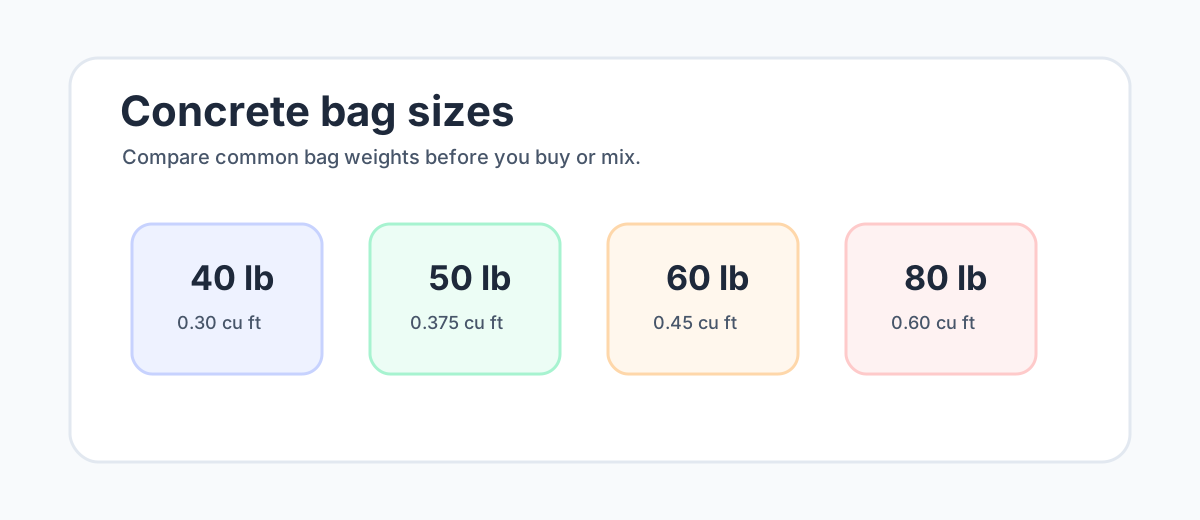
Concrete bag size and yield chart
How much concrete is in a 40, 50, 60, or 80 lb bag?
A bag's weight tells you how much dry mix is inside, and that determines the volume of wet concrete it makes once water is added. The four standard sizes and their approximate yields are below, along with how many bags fill a cubic yard (27 cubic feet) and a typical full-pallet count.
| Bag size | Approx. yield | Bags per cubic yard | Typical pallet |
|---|---|---|---|
| 40 lb | 0.30 cu ft | ≈ 90 | ≈ 80 / pallet |
| 50 lb | 0.375 cu ft | ≈ 72 | ≈ 64 / pallet |
| 60 lb | 0.45 cu ft | ≈ 60 | ≈ 56 / pallet |
| 80 lb | 0.60 cu ft | ≈ 45 | ≈ 42 / pallet |
Yields and pallet counts are estimates; the exact figure is printed on the bag and varies by brand and mix (these are not official manufacturer numbers).
How many bags are in a cubic yard?
How many 80 lb bags are in a cubic yard?
A cubic yard is 27 cubic feet, so divide 27 by the bag yield. That works out to roughly 45 × 80 lb bags, 60 × 60 lb bags, 72 × 50 lb bags, or 90 × 40 lb bags to make one cubic yard. Because you can only buy whole bags, always round up — and remember to apply a waste factor of about 10% before you divide, so spillage and uneven sub-grade do not leave you a bag or two short.
Quick bag-count examples
How many bags for small concrete jobs?
To make the sizes concrete, here are a few common jobs worked at the 80 lb yield of 0.60 cubic feet, with 10% waste and counts rounded up:
- A 3 ft deep, 10-inch-diameter fence-post hole holds about 1.6 cubic feet — roughly 3 × 80 lb bags per hole.
- A 3 ft × 3 ft pad at 4 inches is about 3 cubic feet — around 6 × 80 lb bags.
- A 4 ft × 4 ft landing at 4 inches is about 5.3 cubic feet — around 10 × 80 lb bags.
- A 10 ft × 10 ft slab at 4 inches is about 33.3 cubic feet — or 36.7 cubic feet with 10% waste — so plan on 62 × 80 lb bags, where ready-mix wins.
Switching to 60 lb bags raises each count by roughly a third; 40 lb bags require roughly twice the 80 lb count. The pattern is clear: bags are made for the first two examples, ready-mix for the last.
Mixing effort and pallet weight
The bigger the bag, the fewer you lift — but each one is heavier and a full pallet is a serious load. An 80 lb bag is about as much as most people want to carry repeatedly, and a pallet of around 42 of them weighs roughly 3,300– 3,400 lb, which usually needs machine handling and a delivery that can drop it where you want it. Lighter 40–50 lb bags are easier on your back and pour neatly into narrow post holes, at the cost of more bags, more trips to the mixer, and more open-bag dust. For hand-mixing in a wheelbarrow or tub, most people find 60 lb bags the practical sweet spot between yield and liftable weight.
Which size should you buy?
Match the bag to the job. Post holes and small repairs favor 40–60 lb bags you can pour and mix one at a time. Pads, steps, and small slabs are usually most economical in 80 lb bags if you are still under about a cubic yard. If your project needs more than that, the math tips toward ready-mix: 45-plus bags is a lot of mixing, and batch-to-batch consistency suffers.
When to switch to ready-mix
A useful rule of thumb: once you are buying more than a cubic yard (about 45 × 80 lb bags), get a ready-mix quote. Delivery removes the mixing labor, gives you one uniform batch with no cold joints, and is often cheaper per yard at volume. The catch is the supplier minimum — many charge a short-load fee below roughly one yard — so for borderline jobs, price bags and ready-mix side by side before you commit.
Standard vs fast-setting mix
The same weights are sold as standard concrete mix and as fast-setting mix. Yields are similar, so the bag counts here still apply, but fast-setting mix kicks off in 20–40 minutes — handy for setting posts (you can even dry-pour it into the hole and add water) but unforgiving for large pours where you need working time. Choose the product for the job, then use the size guidance above to decide the bag weight.
A note on brand bags
Major brands such as QUIKRETE and Sakrete publish their own yields and pallet counts, which can differ slightly from the figures above. Always check the bag. These numbers are for planning only and are not official manufacturer specifications.
Assumptions and sources
Where do concrete bag yield numbers come from?
The chart uses common planning yields of 0.30, 0.375, 0.45, and 0.60 cubic feet for 40, 50, 60, and 80 lb bags. Those values are estimates compiled from typical product-label yields, not a promise for every mix. The exact yield and water requirement printed on the bag you buy take priority.
- One cubic yard equals exactly 27 cubic feet, so bags per yard = 27 ÷ yield per bag.
- Bag counts in the chart are before waste; add 5–10% to the project volume before rounding up.
- Pallet counts vary by brand, retailer, packaging, and region and are shown only for handling estimates.
See the methodology and sources page for the site-wide conversion, yield, waste, and rounding rules.
Count your bags
Use the concrete bag calculator to get the exact number of bags for your dimensions in every size at once, or read concrete formula guide to see the full volume method. For a truck order, use the concrete yard calculator; for a local price comparison, use the concrete cost calculator. Setting posts? The post-hole calculator works out bags per hole.