Ready mix concrete delivery checklist
Ready mix is not only a volume order. Before the truck arrives, you need a measured yardage, a clean access plan, enough people to place the load, and a clear understanding of supplier rules such as minimum orders, short-load fees, unload time, and rounding increments.
Confirm the concrete quantity
How many cubic yards should I order?
Start with the measured volume, not the plan drawing. For a slab, measure the formed length and width, then check depth in several places. A slab that is drawn as 4 inches but averages 4.5 inches uses about 12.5% more concrete before any waste factor is added. For walls, footings, steps, and pads, break the work into simple shapes and add them together before rounding.
Use the concrete yard calculator when you need a cubic-yard order quantity. If you are checking a slab, the concrete slab calculator keeps thickness, waste factor, and cubic yards visible in one place. Treat the result as an estimate, then compare it with the supplier's minimum order and rounding rules.
Should I round ready mix to the next quarter yard?
Many suppliers price and dispatch in practical increments, and some jobs are safer when rounded up. If the calculator says 2.18 cubic yards after waste, a 2.25 yard order may be the realistic call. If it says 2.01 yards, ask whether the plant can supply that exact amount or whether the order will be rounded. Do not round down to make the invoice look cleaner. A short pour can cost more than the extra tenth or quarter yard.
Ask the supplier before dispatch
What should I ask when ordering ready mix?
Ask for the minimum order, the smallest ordering increment, short-load fees, delivery charge, included unload time, waiting charges, cancellation cutoff, and whether Saturday or same-day delivery changes the price. Also ask how far the chute can reasonably reach and whether the driver can wash out on site. These details vary by plant, truck, location, and day, so the supplier's answer matters more than a generic online estimate.
If the project has a specific finish requirement, tell the supplier what you are pouring: broom-finished sidewalk, shed pad, post footings, curb repair, or formed slab. This article does not specify mix design, strength, air entrainment, admixtures, or code requirements. Those choices can depend on exposure, local practice, product availability, and building requirements.
How do short-load fees affect the order?
A short-load fee can make a small ready-mix order more expensive than expected. That does not automatically make bags better. Compare the total delivered price with the real bag plan: whole-bag count, store delivery, mixer rental, extra labor, water access, cleanup, and the risk of placing the concrete too slowly. For a visible slab, fast placement may be worth paying for even when the truck invoice is higher.
Check truck access and placement
Can a ready-mix truck reach my pour?
Walk the route before you order. Check driveway width, overhead branches, low wires, parked cars, soft shoulders, tight turns, slopes, septic fields, fresh asphalt, and finished landscaping. A full concrete truck is heavy, and many drivers will not drive where the route is unsafe or likely to damage the property. If the truck cannot reach the forms, plan wheelbarrows, a buggy, a conveyor, or a pump before delivery day.
Chute reach is limited. If the slab is behind the house, across a lawn, or through a narrow gate, a chute-only plan may fail. Count the distance from the truck location to the farthest part of the form. Then decide whether people can move concrete fast enough with wheelbarrows without rutting the yard or exhausting the crew before finishing starts.
How many people do I need for ready mix?
The crew size depends on volume, access, weather, and finish. A small pad near the truck may need only a few people. A long sidewalk, backyard slab, or pour moved by wheelbarrow needs more hands because concrete keeps arriving while the first loads are already setting. Assign roles before the truck arrives: one person checks forms, one directs placement, one or more move concrete, and one starts screeding and edging.
Prepare the site before the truck arrives
What should be ready before concrete delivery?
Forms should be braced, the base should be compacted, reinforcement should be chaired or supported as needed, and tools should be staged where they can be reached without crossing fresh concrete. Have water available for tools, but do not assume you can add water freely to the load. Extra water can change performance and finish quality. Ask the supplier or a qualified professional if slump or mix adjustment is needed.
Clear a safe washout location if the supplier allows washout on site. Protect drains, streets, stormwater paths, and landscaping. Concrete wash water is not something to send into a gutter or yard low spot. If the property cannot handle washout, ask the plant what the driver expects to do after unloading.
What is a ready mix delivery worked example?
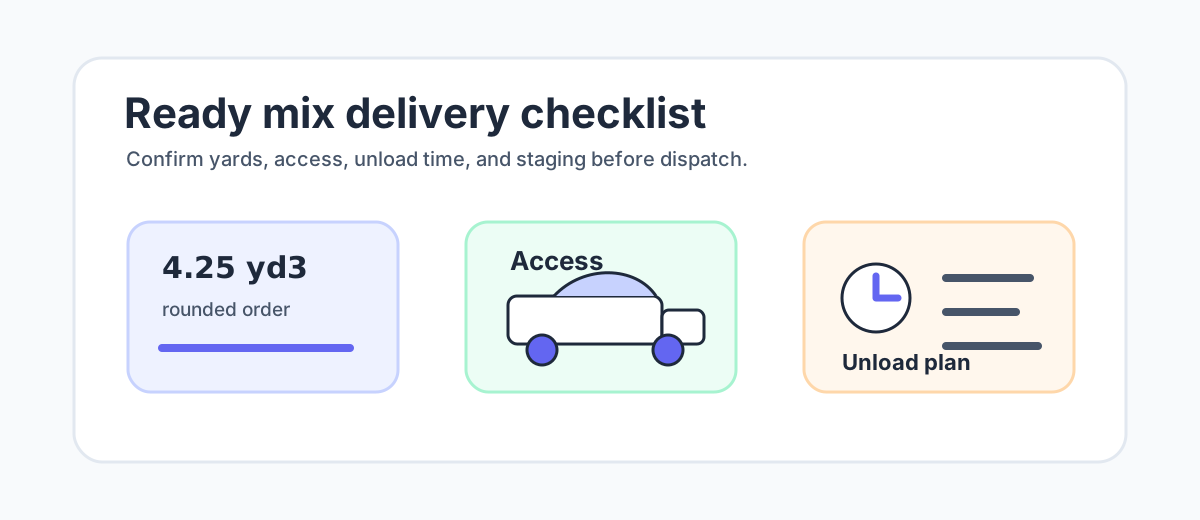
Suppose a patio measures 16 ft by 18 ft and the actual formed depth averages 4.25 inches. The measured volume is 16 x 18 x 4.25 / 12 = 102 cubic feet, or 3.78 cubic yards. With 10% waste, the planning volume is 4.16 cubic yards. If the supplier rounds to quarter-yard increments, the order may become 4.25 yards. Before confirming, you would still ask about truck access, unload time, minimum charge, and whether the chute can reach the slab.
Use delivery planning with cost calculators
Which calculator helps price ready mix delivery?
Use the concrete cost calculator when you want a material-only comparison using a price per cubic yard. Use the concrete slab cost calculator when the question is installed slab cost per square foot. Delivery, waiting time, pumping, reinforcement, removal, permits, and labor can change the real quote, so keep the calculator result separate from the supplier's final invoice.