Concrete bag yield and shortage check
Bag yield is the bridge between cubic feet and the number of bags you actually buy. A good bag estimate uses the measured volume, adds waste, divides by the bag yield, and rounds up to a whole bag before the shopping list is trusted.
Understand bag yield before buying
What does concrete bag yield mean?
Concrete bag yield is the approximate wet volume one bag produces after it is mixed correctly. A common planning yield is about 0.60 cubic feet for an 80 lb bag, 0.45 cubic feet for a 60 lb bag, 0.375 cubic feet for a 50 lb bag, and 0.30 cubic feet for a 40 lb bag. Product labels can differ, so use the label on the bag you will buy when the final count matters.
Yield is not the same as bag weight. A heavier bag usually produces more volume, but different mixes and brands can publish different yields. That is why a bag-count estimate should show the yield assumption instead of hiding it. If the yield is wrong, the whole-bag count can be wrong even when the slab dimensions are measured correctly.
Why does bag yield cause shortages?
Shortages happen when the measured volume is too low, the waste factor is skipped, or a decimal bag count is rounded down. If a job needs 18.2 bags, buying 18 bags is still short. If the actual base is deeper than planned, the count can be short before mixing starts. If the hole walls collapse or the forms bow, the loss is even larger. The best shortage check is simple: calculate honestly, add waste, divide by real yield, then round up.
Calculate bags from cubic feet
What is the formula for concrete bags?
The basic formula is adjusted cubic feet divided by yield per bag. Adjusted cubic feet means the measured volume after waste factor. For example, 10.8 cubic feet with 10% waste becomes 11.88 cubic feet. With an 80 lb bag yield of 0.60 cubic feet, the calculation is 11.88 / 0.60 = 19.8 bags. Because you cannot buy 0.8 of a bag for a pour, the shopping count is 20 bags.
The concrete bag calculator follows that order: volume, waste, yield, whole-bag rounding. If you use a custom product yield, enter the value from the label or product sheet rather than relying only on a common planning number.
How many 80 lb bags do I need for a small slab?
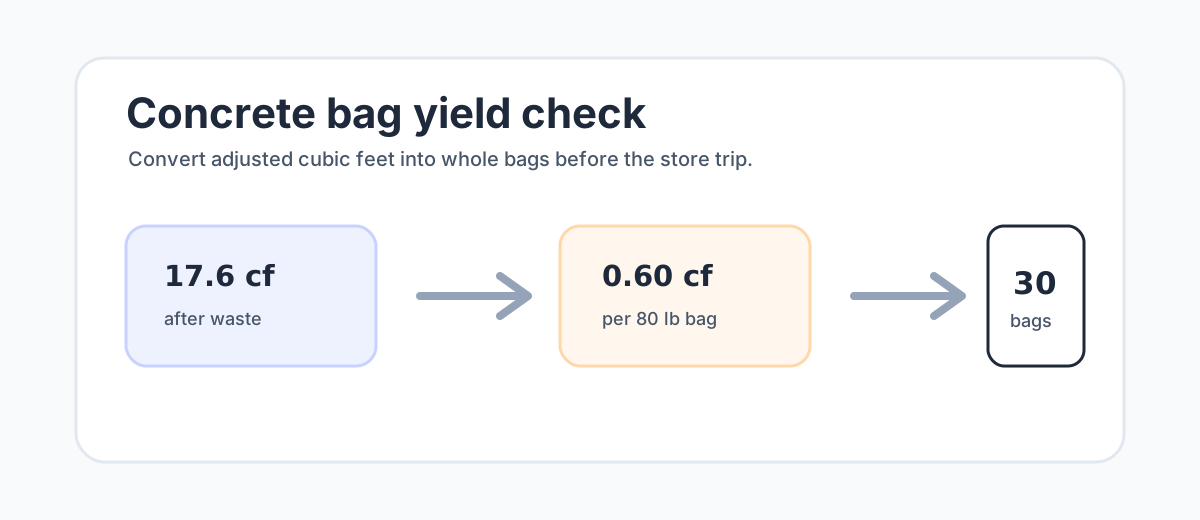
Suppose a small equipment pad is 6 ft by 8 ft by 4 inches. The measured volume is 6 x 8 x 4 / 12 = 16 cubic feet. With 10% waste, the planning volume is 17.6 cubic feet. At 0.60 cubic feet per 80 lb bag, the count is 29.33 bags, so you buy 30 bags. If you buy 29, the estimate is short even though the decimal was close.
Run a shortage check before the store trip
What should I check before buying concrete bags?
Check the actual depth, not only the nominal depth. A 4 inch pad that averages 4.5 inches uses one eighth more concrete before waste. Check whether the form has a thickened edge, whether the gravel base is level, and whether any corners are out of square. For post holes, measure the actual diameter after digging. A 12 inch hole uses more concrete than a 10 inch hole, and that difference grows with depth.
Then check how the bags will be moved and staged. Thirty 80 lb bags are about 2,400 lb before water. That can be a small delivery, a heavy pickup load, or several store trips depending on the vehicle and access. Bag count is not only math; it is also handling, mixing speed, and whether the crew can place the concrete before it stiffens.
Should I buy one or two extra bags?
For small bag jobs, one or two extra bags can be a practical safety margin after the calculated count is rounded up. Extra bags are especially useful when the job has rough excavation, several post holes, a repair patch with irregular edges, or uncertain depth. Keep receipts and unopened bags clean and dry in case the store accepts returns. Do not use extra bags as an excuse to skip measuring.
Choose the right bag size
Are 60 lb bags easier than 80 lb bags?
Sixty-pound bags can be easier to lift, carry, and pour into a mixer, but they usually require more bags for the same volume. That can be a good trade if the path is long, the crew is small, or the work is spread across many post holes. Eighty-pound bags reduce bag count but increase handling weight. The right choice depends on the people doing the work, the route to the pour, and how quickly the concrete must be placed.
Use the concrete bag sizes guide to compare common bag sizes and yields. If the job is close to a full cubic yard, also read bagged concrete vs ready mix before committing to dozens of bags.
When should I switch from bags to ready mix?
Consider ready mix when the bag count becomes hard to move, the pour needs a consistent finish, or the mixing pace could create cold joints. For hidden post holes, bags may stay practical longer because each hole is separate. For a visible slab, the switch point can come earlier because finishing quality depends on placing the whole surface quickly enough. Use bag count as a warning signal, then compare delivery cost and site access.
Use bag yield with other calculators
Which calculator should I use first?
For a slab, start with the concrete slab calculator to confirm volume and waste. For post holes, use the post-hole concrete calculator because diameter changes can have a large effect. When you want to compare bags with a yard order, use the concrete yard calculator and keep the bag yield visible. The safest estimate is the one you can explain from dimensions to final bag count.