How long does concrete take to cure? Walking, driving, and full strength
Fresh concrete sets in hours but keeps gaining strength for weeks. The short answer: walk on it after 24–48 hours, drive on it after about 7 days, and expect full design strength at 28 days. Here is what happens at each stage and how to protect the pour while it cures.
Setting vs. curing: two different things
Is concrete cured when it feels hard?
No. There are two separate processes. Setting is when fresh concrete stiffens and loses its workability, usually within a few hours. Curingis the much longer chemical reaction — hydration — in which cement and water keep bonding and the concrete keeps gaining strength. A slab can feel hard underfoot after a day yet still be far below its rated strength. That gap between "feels solid" and "is strong" is why pours fail when they are loaded too early.
Does concrete cure by drying out?
This is the most common myth. Concrete does not harden by drying; it hardens by reacting with water. If the surface dries too fast, hydration stops, and you get a weak, dusty, or cracked top layer. Good curing keeps the concrete moist for as long as practical — the opposite of letting it dry. That is why crews mist, cover, or apply a curing compound to fresh flatwork, especially in hot or windy weather.
The concrete curing timeline
When can you walk on new concrete?
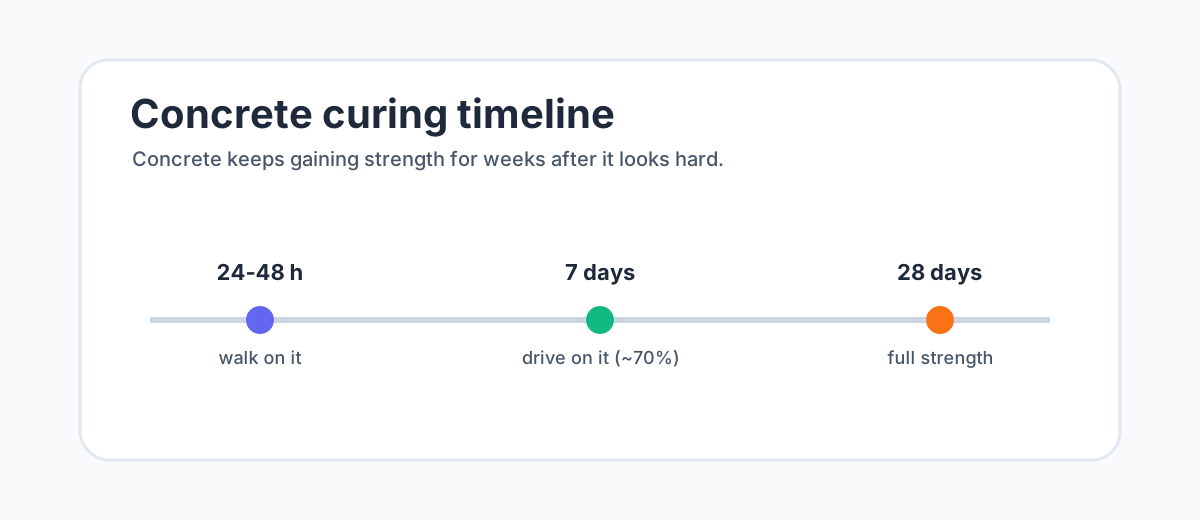
For most standard mixes you can walk on a slab carefully after 24 to 48 hours. Foot traffic sooner than that can dent the surface or leave marks. Cooler temperatures slow the reaction, so a pour in 50°F weather needs longer than the same mix at 70°F. Fast-setting mixes — the kind used to set a fence or mailbox post — are different: many reach walking firmness in well under an hour. If you used a post mix, check the post-hole calculator and the product bag for its specific set time.
When can you drive on new concrete?
Wait about 7 days before driving a passenger vehicle onto a new slab or driveway. At 7 days a typical mix has reached roughly 70% of its design strength, which is usually enough for light vehicle loads. Hold off heavy trucks, dumpsters, or equipment until the full 28 days. Driveway thickness matters too — most are poured 4 to 6 inches thick depending on load, which you can plan with the slab calculator.
When does concrete reach full strength?
The industry benchmark is 28 days. Concrete strength is specified and tested at 28 days — for example a 3,000 or 4,000 psi mix is rated at that age. Most of the strength gain happens early: about 70% by day 7, roughly 85–90% by day 14, and the rest tapering in toward day 28 and slowly beyond. The 28-day figure is a practical standard, not a hard stop; concrete continues to gain a little strength for months.
What changes the curing time
How do temperature and weather affect curing?
Heat speeds hydration and cold slows it. Below about 50°F, strength gain drags and you may need insulating blankets; below freezing, water in the mix can freeze and ruin the pour. Hot, dry, or windy conditions are the opposite hazard: the surface loses water too quickly, causing plastic shrinkage cracks. The fix in both cases is controlled curing — keep the concrete moist and at a moderate temperature for the first several days, which is when most of the strength is won.
Do mix, thickness, and additives matter?
Yes. A richer mix or one with accelerators sets and gains strength faster; retarders and some supplementary cements slow it. Thicker pours hold heat and moisture differently than thin flatwork. None of this changes the volume of concrete you need — that is pure geometry — but it does change how long you wait before loading the pour. Use the slab cost calculator to weigh mix and thickness choices against budget before you order.
How to cure concrete properly
What is the best way to cure a slab?
Keep it moist for at least the first 3 to 7 days. Common methods are wet curing (misting and covering with damp burlap or plastic sheeting), ponding on flat slabs, or spraying a curing compound that seals moisture in. Avoid heavy loads, and protect the surface from foot traffic and weather while it gains strength. A few days of real curing buys most of the durability you paid for in the mix.
When can you remove the forms and seal it?
Side forms on slabs and footings can usually come off after 24 to 48 hours, once the edges are firm enough not to slump — but keep curing the surface even after the forms are gone. Hold off on sealing or staining: most sealers need the concrete to cure and release moisture first, often for 28 days, or they can cloud, peel, or trap water. If you are stamping, coloring, or sealing, follow the specific product's wait time rather than a general rule, because trapping moisture under a coating is a common and expensive curing mistake.
Does curing time affect how much concrete I order?
No — curing time and order quantity are independent. You still calculate volume from length, width, and thickness, add a waste factor, and place the order. What curing affects is your schedule: when forms come off, when you can walk or drive, and when the structure can carry load. If you are ordering ready-mix, plan the pour day with the ready-mix delivery checklist so curing starts under good conditions.
Sources
Where do these curing numbers come from?
The strength and curing figures above are standard, checkable values, not estimates we invented:
- ACI 308R, Guide to External Curing of Concrete — the basis for keeping concrete moist during the first several days and for the role of temperature in strength gain.
- ASTM C39 / ACI 318 — compressive strength is specified and tested at 28 days, which is why that age is the full-strength benchmark.
- Portland Cement Association (PCA), Design and Control of Concrete Mixtures — the early strength-gain curve (roughly 70% by 7 days) and the principle that concrete hardens by hydration, not drying.
Exact set and strength-gain rates vary by mix design, admixtures, and temperature — follow the specifications for your concrete and any product label rather than these general figures.